
Greenwood Family Dentistry | Scaling & Root Planing | Trenton & Hamilton, NJ
Scaling & Root Planing in Trenton, NJ
Bleeding gums, bad breath that won’t go away, or gums that seem to be pulling away from your teeth are often early signs of gum disease. If left untreated, bacteria beneath the gumline can damage the tissues and bone that support your teeth, increasing the risk of tooth loss. The good news is that early treatment can help stop the infection before it becomes more serious. At Greenwood Family Dentistry, we provide scaling and root planing in Trenton, NJ, to remove harmful plaque and tartar below the gumline, reduce inflammation, and help restore healthier gums. Whether you’ve been diagnosed with gingivitis or the early stages of periodontal disease, our team offers personalized care focused on protecting your long-term oral health.
What Is Scaling & Root Planing and Why Do You Need It?
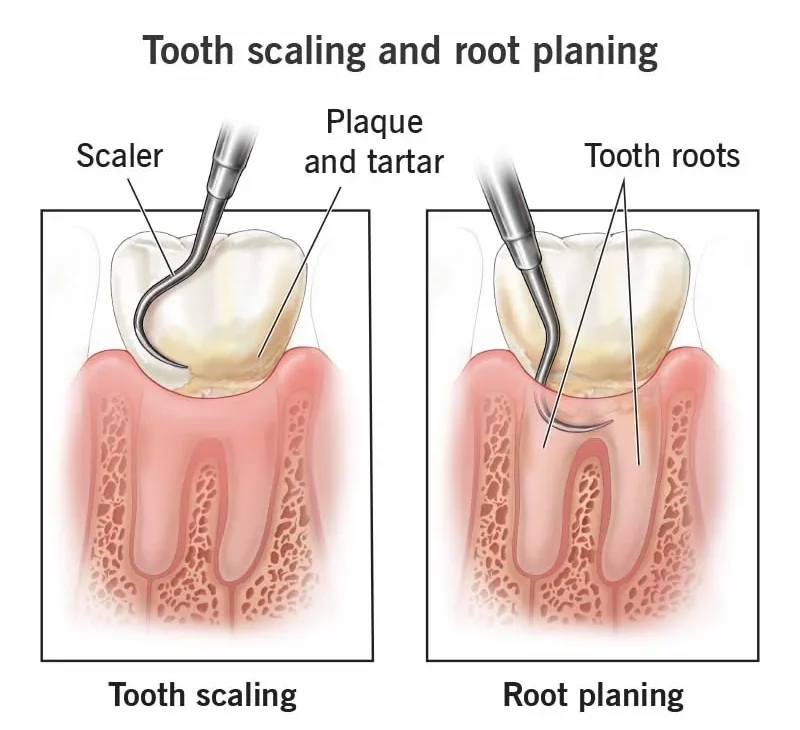
Scaling and root planing is a non-surgical periodontal treatment, often called a deep dental cleaning, that treats gum disease below the gumline. Unlike a routine dental cleaning that removes plaque from the visible surfaces of your teeth, this procedure reaches deep periodontal pockets where bacteria, plaque, and hardened tartar collect. Once these deposits are removed, the root surfaces are carefully smoothed to make it harder for bacteria to build up again and to help the gums reattach more closely to the teeth. This treatment is commonly recommended for patients with gingivitis that has progressed or for those with early to moderate periodontitis.
When Is Scaling and Root Planing Recommended?
Your dentist may recommend periodontal treatment if a routine examination shows signs that bacteria have spread below the gumline. Common signs include:
- Bleeding gums during brushing or flossing
- Swollen, red, or tender gums
- Persistent bad breath (halitosis)
- Gum recession that makes teeth appear longer
- Periodontal pockets measuring 4 mm or deeper
- Plaque and tartar buildup below the gumline
- Early to moderate periodontal disease
- Increased risk factors such as smoking or diabetes
If you’re experiencing any of these symptoms, early treatment can help control the infection before it leads to bone loss or loose teeth. During your visit, Dr. Shariff will perform a thorough evaluation, which may include periodontal measurements and digital X-rays, to determine whether scaling and root planing is the right treatment for your needs. With more than 30 years of clinical experience and training from the University of Pennsylvania School of Dental Medicine, Dr. Shariff provides evidence-based periodontal treatment.
Your Treatment Options
How aggressive the treatment needs to be depends almost entirely on how far the disease has progressed by the time it’s caught:

Early-Stage Gingivitis
Caught before pockets form, gingivitis is fully reversible with a thorough cleaning and better home care — no root planing required yet.

Scaling for Mild Periodontitis
With pockets around 4 to 5 millimeters, scaling clears out the bacteria and tartar driving the inflammation, typically over one or two visits.
Our Scaling & Root Planing Treatment Process
Periodontal Exam / Scaling / Root Planing & Follow-Up

Periodontal Exam
Your visit begins with a comprehensive periodontal evaluation. We will examine your gums, measure the depth of any periodontal pockets, and review digital X-rays if needed to assess the health of the bone supporting your teeth. This will helps determine the stage of gum disease and allows us to create a treatment plan based on your oral health needs.

During the Procedure
Before treatment begins, a local anesthetic is used to numb the treatment area for a more comfortable experience. Using specialized dental instruments, including ultrasonic scalers and hand instruments, plaque, tartar, and harmful bacteria are carefully removed from below the gumline.

Root Planing
The exposed root surfaces are then smoothed to reduce areas where bacteria can collect and to encourage the gums to heal against the teeth. Depending on your condition, treatment may be completed one section, or quadrant, at a time.

Follow-Up
It's normal to experience mild tenderness or temporary tooth sensitivity for a few days after treatment. Most patients return to their regular activities the same day. Brushing, flossing, and following the home care instructions provided by your dentist are important for the healing process and reducing the chance of future gum infections.
Experience Stress-Free, Affordable Care in Greenwood Family Dentistry
Choosing the right dental provider is an important part of protecting your smile. Dr. Shariff brings more than 30 years of clinical experience and advanced training from the University of Pennsylvania School of Dental Medicine, providing patients with trusted care backed by knowledge and experience. Every treatment plan begins with a careful evaluation so we can address the cause of gum disease while helping preserve your natural teeth whenever possible.
Our practice combines modern diagnostic technology, compassionate care, and personalized treatment planning to help patients feel informed and comfortable throughout every stage of treatment. Whether you need scaling and root planing in Trenton, NJ, or ongoing periodontal treatment, we’re committed to helping you achieve healthier gums and maintain your smile for years to come.
PATIENT EXPERIENCES
What Our Patients Are Saying
EXCELLENT Based on 20 reviews
 Posted on Google
 Jake PhillipsAlways easy to find an appointment and the staff are lovely and fast!Posted on Google
 Brett RobertsDr. Shariff is wonderful and sensitive to a patient's discomfort.Posted on Google
 Janio CardonaI’have been a patient of Greenwood Family Dentistry (1902 Greenwood Aven Trenton, Nj)for over two decades, and it’s truly been one of the best dental experiences I’ve had . Back when Dr Richard Nedelman owned the practice , he was an absolute professional- whether it was a routine cleaning, root canals,filling in different materials or any other dental treatment, he always did exceptional work.He was patient,skilled , and even offered flexible payments arrangements to make things more comfortable for his patients. It was incredibly care, and I trusted him completely. After Dr Nedelman got retired a few years ago I was a bit worried about the change,but the new owner, Dr Farad Shariff has been just as outstanding. She is an excellent professional who take her time throughoutly explain every procedure, answer all questions and makes sure you feel comfortable and informed. The entirely staff is efficient,friendly and very punctual- appointments start on time with almost no waiting time.If something comes up and you need to reschedule, they handle it courteously and work with you to find a better date and time.Overall the level of customer service and quality of treatments remains Top-Noch. Greenwood Family Dentistry is a fantastic option for anyone looking for reliable, caring Family Dental Care in the Trenton area. I highly recommend Dr Shariff and the team -A-Plus from me.Posted on Google
 Sarahi DLConvenient hours available if you have a busy life. Friendly staff and always willing to work with one around dental care needs. Thank you!Posted on Google
 Mark UVery professional and accommodating. Dr. Shareef and her staff are courteous and friendly. Dr. Shareef is very knowledgeable in her work and advice. I had 2 different procedures with her in the past few years, and both were very efficient and excellent. I'm very satisfied and would recommend her to anyone and everyone.Posted on Google
 Clifton GrimesDr. Shariff and her team are amazing! The staff are caring, friendly and knowledgeable, and they always make me feel at ease. Dr. Shariff is the best dentist I’ve ever been to, period! Her gentle manner completely removed my fear of dental visits (especially injections 💉💉). I’m so grateful to have found a dentist who truly cares about her patients! Highly recommended!Posted on Google
 Jay DunnThe dentist always cares about the patient's well being.Posted on Google
 shania roseVery clean and peaceful environment. The staff was very pleasant and welcoming. The wait time was not long which I’m thankful for. After my service was done I was informed about possible problem areas and how they could be addressed so that gave me peace of mind. Overall 10/10 experience.
FAQ's
Frequently Asked Questions
Most patients tolerate it well, especially with local anesthesia numbing the area beforehand. Some soreness or sensitivity for a few days afterward is normal. It's generally far less uncomfortable than people expect going in, and far less involved than the gum surgery it's designed to prevent.
No. A routine dental cleaning removes plaque and tartar from the visible surfaces of your teeth and along the gumline. Scaling and root planing is a deep cleaning that treats gum disease by removing bacteria and hardened deposits from below the gumline and smoothing the tooth roots to support healing.
If you have bleeding gums, swollen or receding gums, persistent bad breath, or deep periodontal pockets, you may need scaling and root planing. A comprehensive periodontal evaluation, including gum measurements and digital X-rays when needed, allows your dentist to determine the most appropriate treatment for your oral health.
Scaling and root planing is one of the most effective non-surgical treatments for early to moderate periodontal disease. By removing plaque, tartar, and bacteria from below the gumline, it helps control the infection and prevents it from progressing. Ongoing home care and regular dental visits are essential for maintaining the results.
Assuming that because it doesn't hurt, it isn't serious. Periodontal disease is famously painless through its early and even moderate stages, which is exactly why nearly half of American adults over 30 have some form of it without necessarily knowing the extent. The second common mistake is treating scaling and root planing as a one-time fix rather than committing to follow-up maintenance visits.
It progresses in stages, and each one gets harder to treat. Pockets deepen from a healthy 1 to 3 millimeters into the 4 to 5 millimeter range of early periodontitis, then 6 to 7 millimeters as moderate disease sets in, with measurable bone loss at each step. Left long enough, pockets can exceed 7 millimeters, teeth loosen, and extraction becomes likely. Periodontal disease is also the leading cause of adult tooth loss, and research has linked it to broader health issues, including complications with diabetes and cardiovascular disease.
Many patients benefit from periodontal maintenance every three to four months after scaling and root planing. These visits help remove new bacterial buildup, monitor the health of your gums, and reduce the risk of the infection returning, especially if you've previously had periodontal disease.
Your smile is worth protecting. Schedule your appointment today.
We serve patients from Trenton, Hamilton Township, Lawrence Township, Ewing, Princeton Junction, and the surrounding Mercer County area.
- 609-587-6670
- info@greenwoodfamilydentistry.org
- 1902 Greenwood Ave. Trenton, NJ 08609
- Our Hours: Open Weeknights and Weekends