
Greenwood Family Dentistry | Root Canal | Trenton & Hamilton, NJ
Root Canal Treatment in Trenton, NJ
A toothache that comes in waves, gets worse with hot or cold, or wakes you up at night isn’t something to wait out. That kind of pain usually means the nerve inside your tooth is infected or dying, and once that happens, time isn’t on your side. Root canal treatment has a rough reputation it doesn’t really deserve anymore — these days it’s closer to getting a filling than the dramatic ordeal people picture, and it’s still the best way to save a tooth that would otherwise be lost.
What Is a Root Canal and Why Do You Need It?
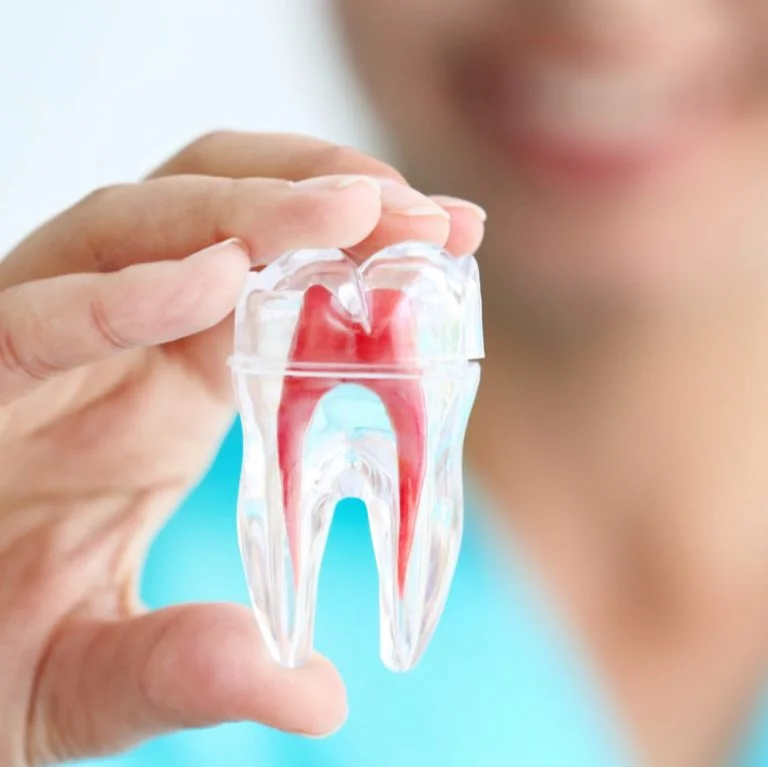
Inside every tooth, beneath the enamel and dentin, is a soft tissue called pulp, made up of nerves and blood vessels. When deep decay, a crack, or trauma lets bacteria reach that pulp, it becomes infected and starts to die. A root canal removes that infected tissue, cleans and disinfects the space left behind, then seals it — eliminating the infection while keeping the natural tooth in place instead of pulling it.
This is one of the most common procedures in dentistry, not some rare last resort. More than 15 million root canals are performed every year in the U.S. alone. And despite the reputation, the data tells a different story than the jokes do: a long-term retrospective study tracking patients for up to 37 years found a 97% tooth survival rate at the 10-year mark, still sitting at 81% after 20 years and 68% after 37. Most studies put overall success rates somewhere between 86% and 98%.
The urgency comes from how infection behaves once it takes hold. Pain easing up doesn’t mean it’s healing — often it means the nerve has died, which can mask the problem while bacteria keep spreading underneath. Left alone, that infection doesn’t stay contained to the tooth.
Your Treatment Options
What a root canal looks like depends on which tooth is affected and how advanced the infection is by the time you come in:

Diagnosis & Imaging
X-rays and a clinical exam confirm the extent of infection and map the canal structure before any treatment begins, since root anatomy varies tooth to tooth.

Standard Root Canal Therapy
The infected pulp is removed, the canals are cleaned and shaped, then filled and sealed — typically completed in one to two visits depending on complexity.

Crown Placement After Treatment
Many treated teeth, especially molars, need a crown afterward for long-term strength, since a root canal leaves the tooth structurally weaker without one.
Our Root Canal Treatment Process
Root canal treatment removes infection, relieves discomfort, and protects your natural tooth, helping restore both your oral health and confidence.

Examination & Diagnosis
We evaluate the tooth, take X-rays, and confirm the extent of infection or damage before recommending treatment.

Removing the Infection
The infected pulp and damaged tissue are carefully removed from inside the tooth under local anesthesia.

Cleaning & Shaping Canals
The root canals are thoroughly cleaned, disinfected, and shaped to prepare them for filling.

Sealing & Restoring
The canals are filled and sealed, and the tooth is restored with a filling or crown for long-term protection.
Experience Stress-Free, Affordable Care in Greenwood Family Dentistry
We hear the anxiety about root canals constantly, and we understand it — the reputation runs deep even though the procedure itself has changed. Modern anesthesia means most patients describe it as comparable to getting a filling, not the ordeal they were dreading. We also know an infected tooth rarely fits into anyone’s budget plans, so we work with most dental insurance plans and offer flexible payment options for patients across Trenton, Hamilton, and Mercer County.
If you’re dealing with persistent tooth pain, don’t wait to see how it plays out. Call Greenwood Family Dentistry today at 609-587-6670 or visit our office to schedule an evaluation.

PATIENT EXPERIENCES
What Our Patients Are Saying
EXCELLENT Based on 20 reviews
 Posted on Google
 Jake PhillipsAlways easy to find an appointment and the staff are lovely and fast!Posted on Google
 Brett RobertsDr. Shariff is wonderful and sensitive to a patient's discomfort.Posted on Google
 Janio CardonaI’have been a patient of Greenwood Family Dentistry (1902 Greenwood Aven Trenton, Nj)for over two decades, and it’s truly been one of the best dental experiences I’ve had . Back when Dr Richard Nedelman owned the practice , he was an absolute professional- whether it was a routine cleaning, root canals,filling in different materials or any other dental treatment, he always did exceptional work.He was patient,skilled , and even offered flexible payments arrangements to make things more comfortable for his patients. It was incredibly care, and I trusted him completely. After Dr Nedelman got retired a few years ago I was a bit worried about the change,but the new owner, Dr Farad Shariff has been just as outstanding. She is an excellent professional who take her time throughoutly explain every procedure, answer all questions and makes sure you feel comfortable and informed. The entirely staff is efficient,friendly and very punctual- appointments start on time with almost no waiting time.If something comes up and you need to reschedule, they handle it courteously and work with you to find a better date and time.Overall the level of customer service and quality of treatments remains Top-Noch. Greenwood Family Dentistry is a fantastic option for anyone looking for reliable, caring Family Dental Care in the Trenton area. I highly recommend Dr Shariff and the team -A-Plus from me.Posted on Google
 Sarahi DLConvenient hours available if you have a busy life. Friendly staff and always willing to work with one around dental care needs. Thank you!Posted on Google
 Mark UVery professional and accommodating. Dr. Shareef and her staff are courteous and friendly. Dr. Shareef is very knowledgeable in her work and advice. I had 2 different procedures with her in the past few years, and both were very efficient and excellent. I'm very satisfied and would recommend her to anyone and everyone.Posted on Google
 Clifton GrimesDr. Shariff and her team are amazing! The staff are caring, friendly and knowledgeable, and they always make me feel at ease. Dr. Shariff is the best dentist I’ve ever been to, period! Her gentle manner completely removed my fear of dental visits (especially injections 💉💉). I’m so grateful to have found a dentist who truly cares about her patients! Highly recommended!Posted on Google
 Jay DunnThe dentist always cares about the patient's well being.Posted on Google
 shania roseVery clean and peaceful environment. The staff was very pleasant and welcoming. The wait time was not long which I’m thankful for. After my service was done I was informed about possible problem areas and how they could be addressed so that gave me peace of mind. Overall 10/10 experience.
FAQ's
Frequently Asked Questions
Modern root canal treatment is typically no more uncomfortable than getting a filling. The procedure itself is done under local anesthesia specifically to relieve pain, not cause it — the infection is what's been causing the discomfort all along. Most patients are surprised by how manageable it actually is compared to what they expected going in.
Most cases are completed in one to two visits, depending on which tooth is involved and how complex the canal anatomy turns out to be. Molars, which often have multiple canals, can take longer than front teeth. Your dentist will give you a realistic estimate after the initial exam and imaging.
Often, yes, especially for back teeth that handle significant chewing force. A root canal removes the tooth's blood supply, which makes it more brittle over time, so a crown provides the structural protection needed to prevent the tooth from cracking under normal use.
With proper restoration and care, often a lifetime. A long-term study tracking patients for up to 37 years found a 97% survival rate at 10 years, 81% at 20 years, and 68% even after 37 years. The biggest factors in long-term success are getting the permanent crown placed promptly and keeping up with regular checkups afterward.
Delaying treatment once symptoms appear, often because the pain temporarily eases up. That's frequently a sign the nerve has died, not that the problem is resolving — the infection can keep spreading into the surrounding bone while symptoms go quiet. The second common mistake is delaying the permanent crown after treatment, which leaves the weakened tooth vulnerable to fracture in the meantime.
The infection doesn't resolve on its own — it spreads. Left untreated, it typically progresses into a dental abscess, eroding the bone that supports the tooth and potentially affecting neighboring teeth. In more serious cases, the infection can spread into the jaw, face, or bloodstream, which can become a genuine medical emergency requiring hospitalization. What starts as a treatable infection becomes significantly harder, and far more costly, to resolve the longer it's left alone.
Your smile is worth protecting. Schedule your appointment today.
We serve patients from Trenton, Hamilton Township, Lawrence Township, Ewing, Princeton Junction, and the surrounding Mercer County area.
- 609-587-6670
- info@greenwoodfamilydentistry.org
- 1902 Greenwood Ave. Trenton, NJ 08609
- Our Hours: Mon & Wed 4pm-7pm | Fri & Sat 9am-2pm
- Sunday, Tuesday & Thursday Closed.
- We offer Evenings, Weekday & Weekend hours.