
Greenwood Family Dentistry | Night Guards for TMJ | Trenton & Hamilton, NJ
Night Guards for TMJ & Teeth Grinding in Greenwood Family Dentistry: What Trenton Patients Should Know
Waking up with a sore jaw or a dull headache isn’t something most people connect to their teeth. But for a lot of patients, that’s exactly where it starts. Teeth grinding happens mostly while you’re asleep, which means you can be doing real damage every night without ever knowing it — until a cracked tooth or chronic jaw pain forces the issue. A night guard is a simple, low-effort fix for a problem that’s easy to underestimate.
What Are Night Guards and Why Do You Need Them?
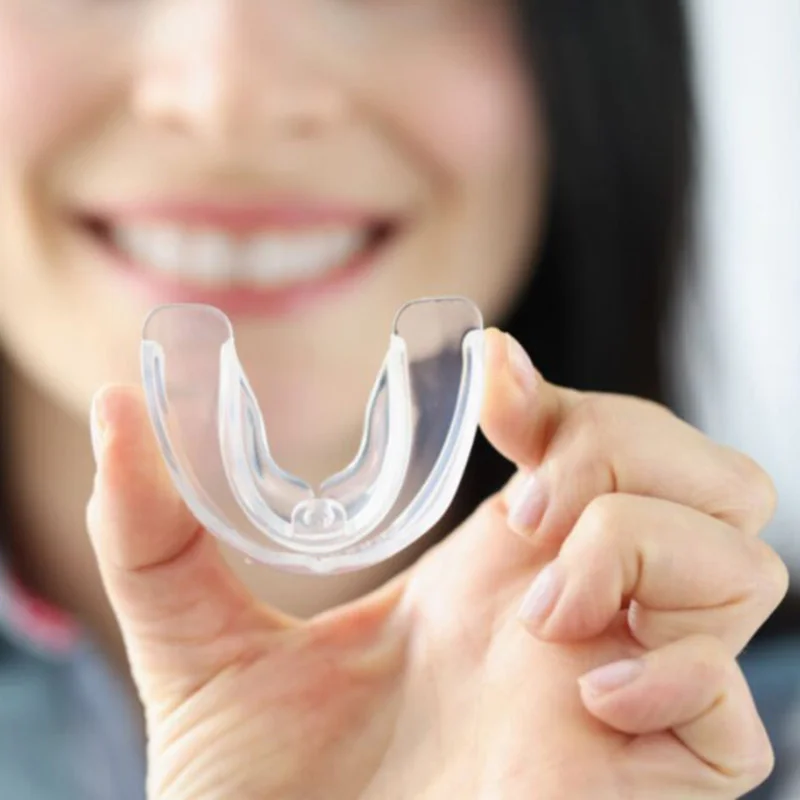
A night guard is a custom-fitted oral appliance worn while you sleep, designed to sit between your upper and lower teeth and absorb the force of grinding and clenching — known clinically as bruxism. It doesn’t stop the underlying habit, but it does intercept the damage, taking the wear that would otherwise fall directly on your enamel.
This is more common than most patients assume. Estimates of bruxism prevalence in adults range widely, from roughly 8% up to 31%, with a frequently cited systematic review putting adult incidence around 18.6%. TMJ disorders affect an estimated 10% to 15% of adults according to researchers at the University of Pennsylvania School of Dental Medicine — and by broader estimates, TMJ disorders affect 10 to 30 million Americans, with about a million new diagnoses every year.
The force involved is the part patients tend to underestimate. A clenching bite can exert up to 250 pounds of pressure, and nighttime grinding forces can run roughly six times higher than normal chewing. That’s pressure your teeth, fillings, crowns, and jaw joint were never built to absorb night after night.
Your Treatment Options
Not every patient needs the same type of guard — it depends on the severity of grinding and whether jaw pain is part of the picture:

Custom-Fitted Night Guards
Molded specifically to your bite, these offer the best fit, comfort, and protection. Custom guards have also been shown to reduce the frequency and intensity of grinding episodes over time.

Soft & Dual-Laminate Guards
Softer materials suited to mild-to-moderate grinding, offering a more cushioned feel. Dual-laminate guards combine a soft inner layer with a firmer outer shell.

Hard Acrylic Guards
Built for more severe grinding or clenching, where a sturdier appliance is needed to withstand significant nightly force without wearing through.
Our Night Guard Treatment Process
Our night guard treatment process includes a comprehensive evaluation, custom impressions, precise fitting, and adjustments for maximum comfort and protection.

Bite & Jaw Evaluation
We check for visible signs of wear, jaw tenderness, and review your symptoms to confirm a night guard is the right fit for your situation.

Impressions
Detailed impressions of your teeth are taken and sent to a dental lab to fabricate a guard molded precisely to your bite.

Custom Fabrication
Your guard is built to the exact shape of your teeth and jaw alignment, using a material suited to the severity of your grinding.

Fitting & Adjustment
We check the fit in person and make small adjustments so the guard feels comfortable and stays securely in place overnight.
Experience Stress-Free, Affordable Care in Greenwood Family Dentistry
A night guard is one of the simplest appliances we provide — no drilling, no anesthesia, and a quick, comfortable fitting process. We take impressions, send them to a lab for a precise custom fit, and make sure it feels right before you leave. We also know cost shouldn’t stand between a patient and a guard that prevents thousands of dollars in future dental work, so we work with most insurance plans covering patients in Trenton, Hamilton, and Mercer County, and offer flexible options where coverage falls short.
If you’re waking up with jaw soreness or headaches, don’t wait for a cracked tooth to take it seriously. Call Greenwood Family Dentistry today at 609-587-6670 or visit our office to schedule an evaluation.
PATIENT EXPERIENCES
What Our Patients Are Saying
EXCELLENT Based on 20 reviews
 Posted on Google
 Jake PhillipsAlways easy to find an appointment and the staff are lovely and fast!Posted on Google
 Brett RobertsDr. Shariff is wonderful and sensitive to a patient's discomfort.Posted on Google
 Janio CardonaI’have been a patient of Greenwood Family Dentistry (1902 Greenwood Aven Trenton, Nj)for over two decades, and it’s truly been one of the best dental experiences I’ve had . Back when Dr Richard Nedelman owned the practice , he was an absolute professional- whether it was a routine cleaning, root canals,filling in different materials or any other dental treatment, he always did exceptional work.He was patient,skilled , and even offered flexible payments arrangements to make things more comfortable for his patients. It was incredibly care, and I trusted him completely. After Dr Nedelman got retired a few years ago I was a bit worried about the change,but the new owner, Dr Farad Shariff has been just as outstanding. She is an excellent professional who take her time throughoutly explain every procedure, answer all questions and makes sure you feel comfortable and informed. The entirely staff is efficient,friendly and very punctual- appointments start on time with almost no waiting time.If something comes up and you need to reschedule, they handle it courteously and work with you to find a better date and time.Overall the level of customer service and quality of treatments remains Top-Noch. Greenwood Family Dentistry is a fantastic option for anyone looking for reliable, caring Family Dental Care in the Trenton area. I highly recommend Dr Shariff and the team -A-Plus from me.Posted on Google
 Sarahi DLConvenient hours available if you have a busy life. Friendly staff and always willing to work with one around dental care needs. Thank you!Posted on Google
 Mark UVery professional and accommodating. Dr. Shareef and her staff are courteous and friendly. Dr. Shareef is very knowledgeable in her work and advice. I had 2 different procedures with her in the past few years, and both were very efficient and excellent. I'm very satisfied and would recommend her to anyone and everyone.Posted on Google
 Clifton GrimesDr. Shariff and her team are amazing! The staff are caring, friendly and knowledgeable, and they always make me feel at ease. Dr. Shariff is the best dentist I’ve ever been to, period! Her gentle manner completely removed my fear of dental visits (especially injections 💉💉). I’m so grateful to have found a dentist who truly cares about her patients! Highly recommended!Posted on Google
 Jay DunnThe dentist always cares about the patient's well being.Posted on Google
 shania roseVery clean and peaceful environment. The staff was very pleasant and welcoming. The wait time was not long which I’m thankful for. After my service was done I was informed about possible problem areas and how they could be addressed so that gave me peace of mind. Overall 10/10 experience.
FAQ's
Frequently Asked Questions
The most common signs are waking up with a sore or tight jaw, frequent morning headaches, visible flattening or chipping on your teeth, or a partner mentioning they hear grinding at night. Many people grind unconsciously and have no idea it's happening until a dentist spots the wear pattern during a routine exam.
Not exactly — it doesn't eliminate the underlying habit, but it intercepts the damage. The guard absorbs the force of grinding and clenching instead of your teeth taking the impact directly. Research has also shown custom-fitted guards can reduce the frequency and intensity of grinding episodes, even though the reflex itself isn't fully cured.
They're related but not identical. Bruxism refers specifically to the grinding or clenching habit, while TMJ disorder describes problems with the jaw joint itself — pain, clicking, or restricted movement. Research has found the relationship between the two is more complicated than commonly assumed, and not everyone who grinds their teeth develops TMJ pain, or vice versa. A proper evaluation helps sort out which is driving your symptoms.
It depends on the material and how heavily you grind. Hard acrylic guards tend to hold up longest under severe grinding, while softer guards may wear through faster if clenching is intense. Most patients get several years of use from a custom guard with proper care, though it's worth having it checked periodically for thinning or cracks.
Dismissing mild symptoms because they come and go. A little jaw soreness feels easy to ignore, but bruxism is often a slow, cumulative process — by the time damage is obvious, like a chipped tooth or cracked filling, the underlying grinding has usually been going on for a while. Early intervention with a properly fitted guard is far simpler than the dental work needed to repair worn or fractured teeth later.
It tends to get progressively worse on the teeth and the jaw. Chronic grinding wears down enamel, increases sensitivity, and can crack or fracture teeth as well as existing crowns and fillings. Left long enough, wear can progress through enamel into the dentin underneath, which is significantly more painful and may ultimately require a root canal or extraction. On the jaw side, untreated grinding is also associated with chronic jaw and facial pain, frequent headaches, and disrupted sleep for both the patient and anyone sharing the bed.
Your smile is worth protecting. Schedule your appointment today.
We serve patients from Trenton, Hamilton Township, Lawrence Township, Ewing, Princeton Junction, and the surrounding Mercer County area.
- 609-587-6670
- info@greenwoodfamilydentistry.org
- 1902 Greenwood Ave. Trenton, NJ 08609
- Our Hours: Open Weeknights and Weekends