
Greenwood Family Dentistry | Veneers | Trenton & Hamilton, NJ
Veneers in Trenton, NJ
Chipped teeth, deep stains, small gaps, or uneven tooth shape can make you feel careful every time you smile, talk, or take a photo. Some people try whitening, but whitening cannot fix tooth shape, worn edges, cracks, or spacing. Dental veneers may be a good option if you want a natural-looking smile improvement without changing every tooth. At Greenwood Dentistry, Dr. Farah Shariff, DMD helps patients understand whether veneers are the right choice for their teeth, gums, bite, and smile goals.
What Are Veneers and Why Might You Want Them?
Veneers are thin shells — porcelain or composite resin — bonded to the front surface of your teeth. Not the whole tooth, just the visible part. That’s what makes them different from a crown, which covers everything. A veneer corrects what you see without removing more tooth structure than necessary.
People come in for veneers for different reasons. One patient has a chip from biting into something years ago and has been hiding that tooth ever since. Another has deep staining that whitening never fully cleared — the kind that comes from tetracycline antibiotics or fluorosis, not just coffee. Someone else has a small gap between their front teeth that’s always made them self-conscious, or a tooth that’s slightly shorter than the rest and throws off the whole smile.
Veneers fix all of those things. What they fix is appearance. They don’t restore a tooth that’s structurally compromised, they don’t fix a misaligned bite, and they’re not a substitute for treating gum disease first. But when the issue is genuinely cosmetic — shape, color, minor spacing, worn edges — veneers are one of the most effective and natural-looking options available.
Porcelain vs. Composite — What’s the Actual Difference?
Porcelain veneers are made in a dental lab, custom-matched to your natural tooth shade, and bonded in place over two visits. They last 10 to 15 years in most cases, resist staining well, and reflect light the way natural enamel does. Once placed, most people can’t tell they’re there — including the patient.
Composite veneers use the same resin material as tooth-colored fillings. They’re shaped and applied directly to the tooth in a single visit, which makes them faster and more affordable. The tradeoff is lifespan — composite tends to last 4 to 8 years, picks up staining from coffee and wine more readily than porcelain, and may need touching up or replacing sooner. For patients who want to try the look before committing to porcelain, or who need a budget-conscious option, composite is a reasonable place to start.
Dr. Shariff will tell you which makes more sense for your specific situation — your timeline, your budget, how many teeth are involved, and what your bite looks like. There’s no universal answer.
One Thing Worth Knowing Before You Decide
Porcelain veneers require a thin layer of enamel to be removed from the front of the tooth so the veneer sits flush and doesn’t look bulky. That enamel doesn’t grow back. It’s a small amount — usually less than a millimeter — but it means the tooth will always need some form of covering going forward. That’s not a reason to avoid veneers if they’re right for you. It is a reason to be sure before you start.
Composite veneers are less invasive. In many cases, little to no enamel needs to be removed at all, which is why some patients choose composite as a first step before deciding on porcelain.
If you’re not sure which direction makes sense, that’s exactly what a consultation is for. No commitment, no pressure — just a clear explanation of your options based on what your teeth actually look like.
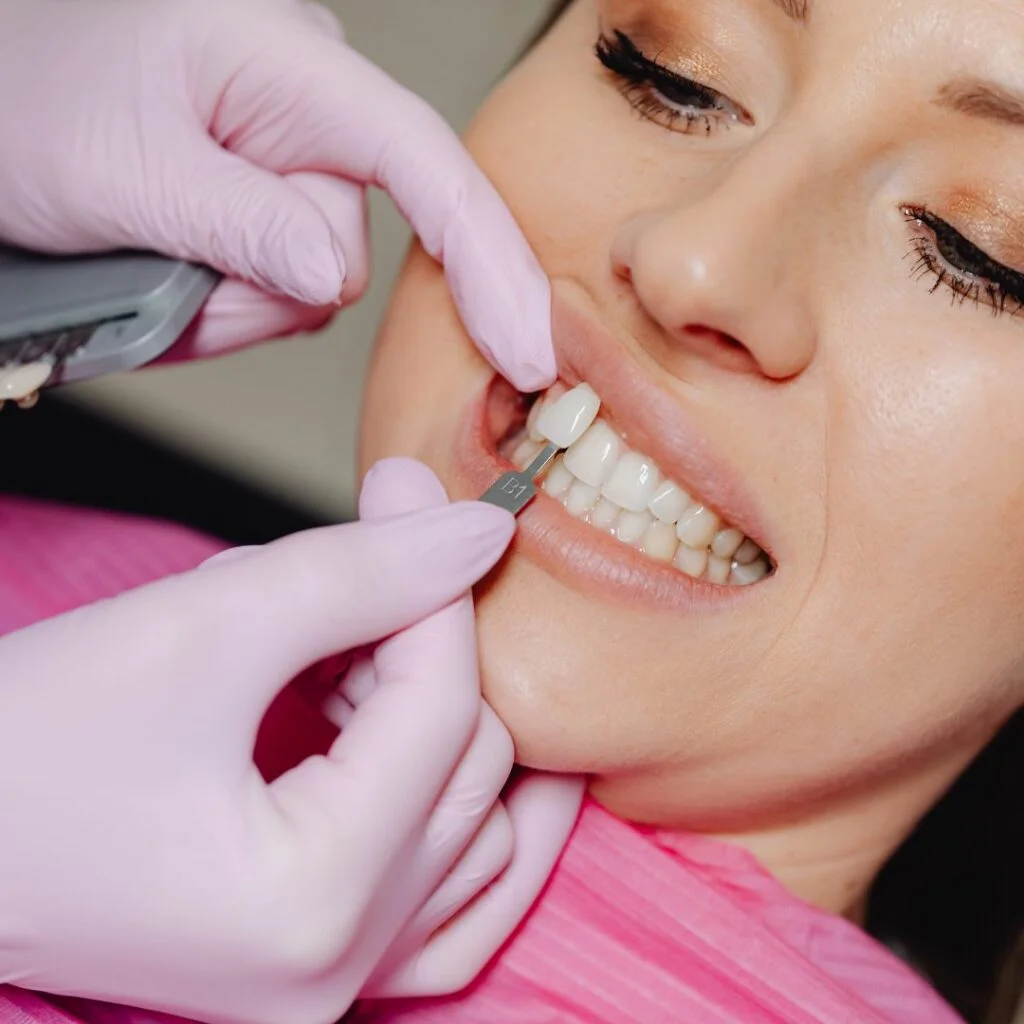
Your Treatment Options
The right veneer depends on your goals, your timeline, and how much of your natural tooth you’re comfortable having altered:

Porcelain Veneers
Porcelain veneers are thin ceramic shells made to match the look of natural enamel. They are often chosen for patients who want a long-lasting, stain-resistant smile improvement. Porcelain can reflect light in a way that looks close to natural teeth, which is why many people choose it for front teeth.

Composite Veneers
Composite veneers are made with tooth-colored composite resin. This is the same type of material often used for dental bonding and tooth-colored dental fillings. Composite veneers may be completed faster in some cases and may cost less than porcelain veneers. However, they may stain or wear sooner and may need more maintenance over time.

Smile Design Consultation
Before any tooth is touched, we discuss the look you're going for and walk through a preview of your new smile, so there are no surprises once the veneers are placed.
Our Veneers Treatment Process
Our veneers treatment process includes a personalized consultation, smile assessment, custom veneer design, precise placement, and final adjustments for a natural-looking result.

Consultation & Planning
You and Dr. Shariff discuss what you want to improve. This may include tooth color, tooth shape, smile balance, gaps, or chipped front teeth.

Tooth Preparation
Some veneers need light tooth preparation. For porcelain veneers, a thin layer of enamel may be adjusted so the veneer fits well. Composite veneers may need less preparation in some cases.

Fabrication & Temporary Veneers
If porcelain veneers are being made by a lab, temporary veneers may be placed while you wait for the final veneers.

Bonding & Final Fit
When the final veneers are ready, they are bonded to your teeth with dental adhesive or cement. We check the fit, bite, shape, and comfort before you leave.
Why Choose Dr. Farah Shariff for Veneers in Trenton, NJ?
Choosing veneers means trusting a dentist with both your smile and your natural teeth. Experience and honest guidance matter.
Dr. Farah Shariff, DMD offers:
- Nearly 30 years of dental experience
- Doctor of Dental Medicine degree from the University of Pennsylvania School of Dental Medicine
- Experience in general dentistry
- A health-first approach to cosmetic treatment
- Clear explanations before treatment
- Care focused on comfort and long-term oral health
At Greenwood Dentistry, veneers are not recommended without checking your teeth first. If veneers are a good option, Dr. Shariff will explain why. If bonding, whitening, crowns, or another treatment may be better, she will explain that too.
If you’ve been thinking about veneers for a while, let’s talk through whether they’re the right fit. Call Greenwood Family Dentistry today at 609-587-6670 or visit our office to schedule your consultation.
PATIENT EXPERIENCES
What Our Patients Are Saying
EXCELLENT Based on 20 reviews
 Posted on Google
 Jake PhillipsAlways easy to find an appointment and the staff are lovely and fast!Posted on Google
 Brett RobertsDr. Shariff is wonderful and sensitive to a patient's discomfort.Posted on Google
 Janio CardonaI’have been a patient of Greenwood Family Dentistry (1902 Greenwood Aven Trenton, Nj)for over two decades, and it’s truly been one of the best dental experiences I’ve had . Back when Dr Richard Nedelman owned the practice , he was an absolute professional- whether it was a routine cleaning, root canals,filling in different materials or any other dental treatment, he always did exceptional work.He was patient,skilled , and even offered flexible payments arrangements to make things more comfortable for his patients. It was incredibly care, and I trusted him completely. After Dr Nedelman got retired a few years ago I was a bit worried about the change,but the new owner, Dr Farad Shariff has been just as outstanding. She is an excellent professional who take her time throughoutly explain every procedure, answer all questions and makes sure you feel comfortable and informed. The entirely staff is efficient,friendly and very punctual- appointments start on time with almost no waiting time.If something comes up and you need to reschedule, they handle it courteously and work with you to find a better date and time.Overall the level of customer service and quality of treatments remains Top-Noch. Greenwood Family Dentistry is a fantastic option for anyone looking for reliable, caring Family Dental Care in the Trenton area. I highly recommend Dr Shariff and the team -A-Plus from me.Posted on Google
 Sarahi DLConvenient hours available if you have a busy life. Friendly staff and always willing to work with one around dental care needs. Thank you!Posted on Google
 Mark UVery professional and accommodating. Dr. Shareef and her staff are courteous and friendly. Dr. Shareef is very knowledgeable in her work and advice. I had 2 different procedures with her in the past few years, and both were very efficient and excellent. I'm very satisfied and would recommend her to anyone and everyone.Posted on Google
 Clifton GrimesDr. Shariff and her team are amazing! The staff are caring, friendly and knowledgeable, and they always make me feel at ease. Dr. Shariff is the best dentist I’ve ever been to, period! Her gentle manner completely removed my fear of dental visits (especially injections 💉💉). I’m so grateful to have found a dentist who truly cares about her patients! Highly recommended!Posted on Google
 Jay DunnThe dentist always cares about the patient's well being.Posted on Google
 shania roseVery clean and peaceful environment. The staff was very pleasant and welcoming. The wait time was not long which I’m thankful for. After my service was done I was informed about possible problem areas and how they could be addressed so that gave me peace of mind. Overall 10/10 experience.
FAQ's
Frequently Asked Questions
Porcelain veneers often last 10 to 15 years or longer with good care. Their lifespan depends on brushing, flossing, bite pressure, grinding habits, enamel support, and regular dental visits. A night guard may be recommended if you clench or grind your teeth.
For porcelain veneers, essentially yes. A thin layer of enamel needs to be removed to fit the veneer properly, and that enamel doesn't regenerate, which means you'll need some form of restoration on that tooth going forward. Composite veneers are less invasive and, in some cases, can be removed or adjusted without the same impact on the natural tooth.
Porcelain is more durable, more stain-resistant, and looks more like natural enamel, but it costs more and is fabricated in a lab over two visits. Composite is more affordable, can usually be completed in a single visit, but doesn't last as long and is more prone to picking up stains from coffee, wine, and similar foods over time.
Yes, most patients can eat normally after veneers are bonded and adjusted. You should avoid chewing ice, biting hard objects, opening packages with your teeth, or putting heavy pressure on front veneers because these habits can chip or loosen them.
Choosing a dentist based on price alone rather than skill and experience with cosmetic work. Veneers are as much an art as a clinical procedure, and a poorly shaped or shaded veneer is difficult and expensive to fully correct. The second common mistake is treating veneers as a substitute for treating underlying issues like gum disease or bite problems, when those need to be addressed first.
Porcelain veneers that chip or crack typically need to be replaced rather than repaired, since porcelain doesn't bond well to itself once damaged. Composite veneers are easier to repair in many cases, often in a single appointment. Either way, getting it addressed promptly matters — a chipped veneer can expose the underlying tooth structure to decay or further damage if left alone.
Your smile is worth protecting. Schedule your appointment today.
We serve patients from Trenton, Hamilton Township, Lawrence Township, Ewing, Princeton Junction, and the surrounding Mercer County area.
- 609-587-6670
- info@greenwoodfamilydentistry.org
- 1902 Greenwood Ave. Trenton, NJ 08609
- Our Hours: Monday & Wednesday 4pm -7pm
- Friday & Saturday 9am- 2pm
- We Offer Evenings, Weekday And Weekend Hours