
CROWNS, BRIDGES & IMPLANT CROWNS — GREENWOOD FAMILY DENTISTRY Trenton, NJ
Crowns, Bridges & Implant Crowns in Trenton, NJ
Dental crowns, bridges and implant crowns are types of procedures to help with your damaged or missing teeth. A dental crown is used for decayed or cracked teeth and a bridge is applied for missing teeth. Whereas, an implant crown is a surgical procedure for a similar purpose as bridge. However, each of these fixes have their own benefits, role, and costs.
The guide below from Greenwood Family Dentistry walks you through all three so you can have an informed conversation with Dr. Shariff about which one makes sense for your situation.
Crowns vs Bridges vs Implant Crowns: Which is Right for You?
Knowing which procedure is right for you depends on the dental problem you are facing. Dr. Farah Shariff recommends a dental checkup before choosing between a crown, bridge, or implant crown — the right answer depends on your specific situation, and a proper exam makes that clear. Read through to understand the differences, pros, and cons of all three options.
What are Dental Crowns?
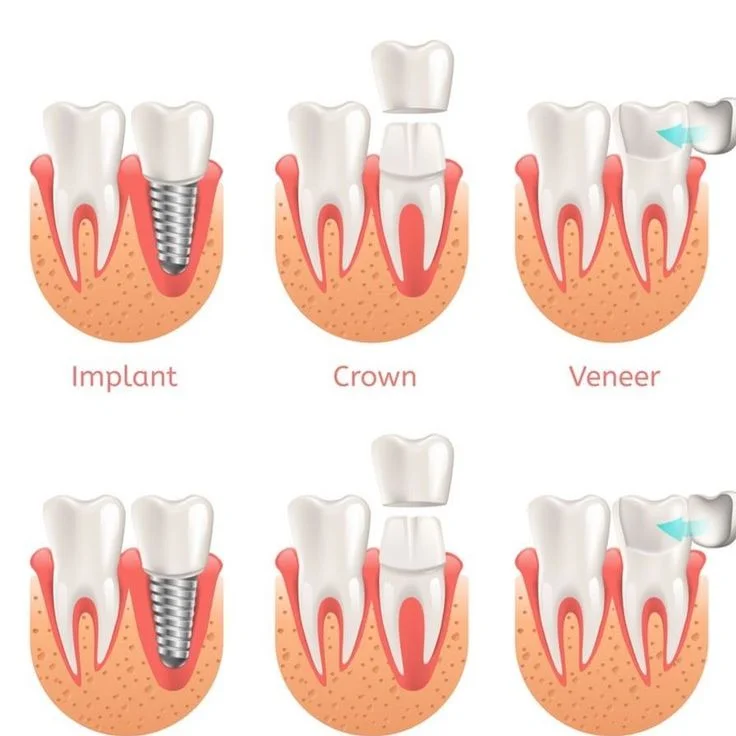
A dental crown is a cap that fits over a damaged tooth completely, restoring its shape, strength, and appearance after decay or injury. Dentists craft crowns from porcelain, metal, or a combination of both — each material serves a different need depending on where the tooth sits in your mouth and how much pressure it takes when you chew. Think of it as a protective shell built specifically around what’s left of your natural tooth.
Pros and Cons of Dental Crowns
Below are mentioned the pros and cons of dental crowns.
Pros
- Strengthens weak teeth
- Better oral health to minimize the risk of certain health issues.
- Helpful for reducing risk of fracture post root canal.
Cons
- Requires tooth reshaping
- Can wear over time
- Costs more than fillings
When is Dental Bridge Considered?
Dental bridges are used to fill the gap when one or more teeth are missing. Crowns are used with bridges on the teeth next to the gap. It helps to hold a false tooth in place. As a result, it keeps your bite aligned and stops nearby teeth from shifting out of place.
Pros and Cons of Dental Bridges
The pros and cons of dental bridges are outlined below.
Pros
- Fills missing gaps
- Restores normal chewing
- Prevents neighbouring teeth from shifting
Cons
- Needs healthy neighboring teeth
- Doesn’t stop bone loss
- May need future replacement
When Implant Crowns are Required?
An implant crown is a tooth-shaped cap — the visible part of a dental implant — that replaces a missing tooth from the root up. The dentist surgically places a titanium post directly into the jawbone, then attaches a custom crown on top once the bone heals around it. Dentists typically craft implant crowns from zirconia or porcelain, giving them the look, feel, and function of a natural tooth.
Pros and Cons of Implant Crowns
Let’s have a look at the pros and cons of implant crowns below.
Pros
- Feels like real teeth
- Preserves jawbone density
- Lasts many years
Cons
- Requires a surgical procedure
- Higher upfront cost
- Takes time to heal(Usually 4-9 months)
Your Treatment Options
Honestly, there is no single answer to the question of whether crowns, bridges, and implant crowns are better. However, you can consider the following factors before making a decision.

Condition of the Teeth and Oral Health
If most of your teeth are still healthy, then a crown is a good choice. While people with missing teeth must go for an implant crown when gums are healthy and have enough jawbone. Bridges are a good option when your mouth needs treatment first.

Consider Your Budget
Crowns and bridges are cheaper upfront than implants. However, implants can save money in the longer term since they last decades.

Emergency Treatment Options
If you have a tooth emergency such as pain, structural damage, bleeding or detachment of tooth or previous implant, then you should consult a dentist immediately. An emergency dentist NJ like Greenwood Dentistry can analyze your situation and suggest the right fix that can involve crown, bridge and implant crown restoration or extraction can also be required.
Waiting on any of these tends to make the eventual fix more involved, not less. A cracked tooth left uncrowned can fracture further and become unsalvageable. A gap left unaddressed lets surrounding bone resorb, which can rule out a straightforward implant later and push you toward a bone graft instead.
Our Crowns, Bridges & Implant Crowns Treatment Process
Consultation / Preparation & Impressions / Placement & Fit

Consultation & Exam
We evaluate the damaged tooth or gap and determine whether a crown, bridge, or implant crown fits your situation best.

Tooth Preparation
For crowns and bridges, the tooth is reshaped to receive the restoration. Implant crowns instead begin with placement of the titanium post.

Impressions & Temporary Restoration
Precise impressions are sent to a dental lab, with a temporary crown or bridge placed in the meantime to protect the area.
Final Fitting & Placement
Your custom restoration is checked for fit and bite alignment, then permanently cemented or attached.
Experience Stress-Free, Affordable Care in Greenwood Family Dentistry
Crowns, bridges and implant crowns each solve a different dental problem. The right choice depends on your tooth condition, budget and long-term goals. However, whether you go for a single crown or bridge and implant crown both, it’s necessary to consult a trusted family dentist in NJ, like Greenwood dentistry.
Dr. Farah at Greenwood family dentistry in NJ is one of the renowned dentists who has helped many families for dental care in New Jersey. She has nearly 30 years of expertise, and has been fixing issues for Trenton area families since the 1990s. She also provides crowns, bridges and implant crowns dental checkups to protect your long term investment.
Book a consultation today and let us help you take the first step towards a healthier and confident smile.
PATIENT EXPERIENCES
What Our Patients Are Saying
EXCELLENT Based on 20 reviews
 Posted on Google
 Jake PhillipsAlways easy to find an appointment and the staff are lovely and fast!Posted on Google
 Brett RobertsDr. Shariff is wonderful and sensitive to a patient's discomfort.Posted on Google
 Janio CardonaI’have been a patient of Greenwood Family Dentistry (1902 Greenwood Aven Trenton, Nj)for over two decades, and it’s truly been one of the best dental experiences I’ve had . Back when Dr Richard Nedelman owned the practice , he was an absolute professional- whether it was a routine cleaning, root canals,filling in different materials or any other dental treatment, he always did exceptional work.He was patient,skilled , and even offered flexible payments arrangements to make things more comfortable for his patients. It was incredibly care, and I trusted him completely. After Dr Nedelman got retired a few years ago I was a bit worried about the change,but the new owner, Dr Farad Shariff has been just as outstanding. She is an excellent professional who take her time throughoutly explain every procedure, answer all questions and makes sure you feel comfortable and informed. The entirely staff is efficient,friendly and very punctual- appointments start on time with almost no waiting time.If something comes up and you need to reschedule, they handle it courteously and work with you to find a better date and time.Overall the level of customer service and quality of treatments remains Top-Noch. Greenwood Family Dentistry is a fantastic option for anyone looking for reliable, caring Family Dental Care in the Trenton area. I highly recommend Dr Shariff and the team -A-Plus from me.Posted on Google
 Sarahi DLConvenient hours available if you have a busy life. Friendly staff and always willing to work with one around dental care needs. Thank you!Posted on Google
 Mark UVery professional and accommodating. Dr. Shareef and her staff are courteous and friendly. Dr. Shareef is very knowledgeable in her work and advice. I had 2 different procedures with her in the past few years, and both were very efficient and excellent. I'm very satisfied and would recommend her to anyone and everyone.Posted on Google
 Clifton GrimesDr. Shariff and her team are amazing! The staff are caring, friendly and knowledgeable, and they always make me feel at ease. Dr. Shariff is the best dentist I’ve ever been to, period! Her gentle manner completely removed my fear of dental visits (especially injections 💉💉). I’m so grateful to have found a dentist who truly cares about her patients! Highly recommended!Posted on Google
 Jay DunnThe dentist always cares about the patient's well being.Posted on Google
 shania roseVery clean and peaceful environment. The staff was very pleasant and welcoming. The wait time was not long which I’m thankful for. After my service was done I was informed about possible problem areas and how they could be addressed so that gave me peace of mind. Overall 10/10 experience.
FAQ's
Frequently Asked Questions
A well-placed crown typically lasts between 5 and 15 years, depending on the material and how it's cared for. The most common point of failure isn't the crown itself — it's secondary decay at the margin, the seam where the crown meets your natural tooth at the gum line. Good brushing right at that edge matters more than people expect.
Most traditional bridges last between 5 and 15 years, and bridges anchored to implants can go significantly longer — often 20 to 30 years — since they don't rely on natural teeth that can decay. The biggest factor either way is hygiene around the abutment teeth. Plaque buildup at that junction is the leading cause of early bridge failure.
Very. Long-term studies put implant survival at around 95% to 98% over a 10-year period, among the highest success rates in restorative dentistry. The crown sitting on top has a slightly lower 10-year survival, closer to 89%, since it's the part doing the daily work of biting — but replacing a crown on a healthy implant is far simpler than starting over.
Ignoring early discomfort or a slightly loose feeling instead of getting it checked. A crown that feels "a little off" when biting down is often a sign the fit has shifted or decay has started underneath — and catching that early is a simple fix. Left alone, it tends to progress into damage that requires redoing the whole restoration rather than adjusting it.
It depends on the situation, but implants generally preserve more of your natural jawbone since the post replaces the function of the missing tooth root. A bridge, by contrast, requires grinding down two healthy neighboring teeth to act as anchors. For patients who want to avoid altering otherwise healthy teeth, an implant crown is often the better long-term choice, even though it takes longer start to finish.
The most common reason dental implants fail is gum infection around the implant, known as peri implant disease. It usually happens due to poor oral hygiene which allows bacteria to build up and damage the surrounding tissue and bone. Some other reasons are smoking, uncontrolled diabetes and not following your dentist’s care instructions can increase the risk. You can prevent your dental implants from failing by regular brushing, flossing, going for regular crowns, bridges and implant crowns dental checkups.
If you take proper care, they continue to function well even after 20 years. Although the implant crown may need replacement because of normal wear. Whereas, the implant, titanium post is designed to last long which can be fused with the jawbone through osseointegration. Individuals who are cautious of oral health care, get regular while going for crown, bridges and implant crowns dental checkups remain successful in keeping their implant healthy for longer.
Your smile is worth protecting. Schedule your appointment today.
We serve patients from Trenton, Hamilton Township, Lawrence Township, Ewing, Princeton Junction, and the surrounding Mercer County area.
- 609-587-6670
- info@greenwoodfamilydentistry.org
- 1902 Greenwood Ave. Trenton, NJ 08609
- Our Hours: Mon & Wed 4PM - 7PM | Fri & Sat 9am-2pm
- Sunday, Tuesday & Thursday Closed.
- We offer Evenings, Weekday & Weekend Hours