
DENTAL SEALANTS — GREENWOOD FAMILY DENTISTRY Trenton, NJ
Dental Sealants in Greenwood Family Dentistry: What Trenton Families Should Know
Most cavities don’t start where you’d expect. They start in the tiny grooves on the chewing surface of a back tooth — grooves so narrow a toothbrush bristle can’t fully reach them. Sealants close that gap, literally. It’s a five-minute, no-drill procedure that’s been protecting teeth for over 40 years, and it’s one of the most underused tools in preventive dentistry.
What Are Dental Sealants and Why Do You Need Them?
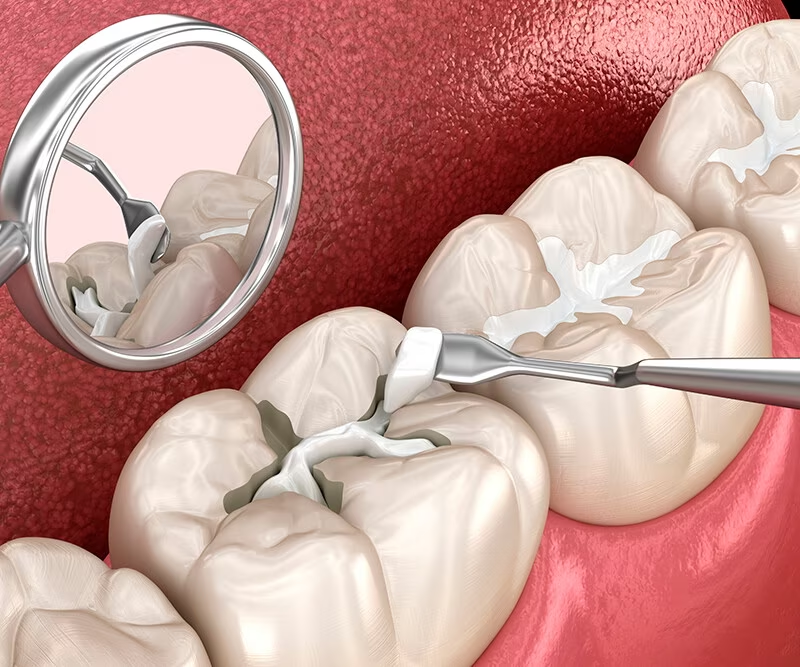
A sealant is a thin protective coating, usually resin-based, painted directly onto the chewing surfaces of molars and premolars. Once it hardens, it forms a smooth physical barrier over the natural pits and fissures where food particles and bacteria tend to get trapped — sealing out the exact conditions that let decay take hold.
The numbers behind this are hard to ignore. The CDC reports that sealants prevent roughly 80% of cavities for the first two years after application, and continue protecting against about 50% of cavities for up to four years. Kids aged 6 to 11 without sealants get nearly three times more cavities in their first molars than kids who have them. And yet only about 43% of children in that age group actually have one.
That gap matters. Untreated cavities don’t just cause pain — they can interfere with eating, speaking, and concentrating in school. Sealants aren’t only for children, either. Adults with deep grooves in their molars, or a history of cavities in those spots, are often good candidates too.
Your Treatment Options
Sealants are a simple procedure, but timing and tooth selection make a real difference in how much protection you get:

Resin-Based Sealants
The most common option, and the most durable — retention rates run as high as 80% after two years. Applied as a liquid that hardens under a curing light, bonding directly into the grooves of the tooth.

First Molar Sealants
Best applied as soon as a child's first permanent molars erupt, typically around age 6. This is the highest-decay-risk window, and sealing these teeth early offers the biggest long-term payoff.

Second Molar & Premolar Sealants
Applied around age 12, when the second molars come in, or any time afterward for premolars and any tooth with deep, decay-prone grooves — including in adults.
Delaying sealants doesn’t carry the same urgency as ignoring a cavity, but it does mean missing the window. Once decay starts in a pit or fissure, a sealant can no longer prevent it — at that point you’re looking at a filling instead of a five-minute coating.
Our Dental Sealants Treatment Process
Consultation / Preparation & Impressions / Placement & Fit

Cleaning & Drying
The tooth is thoroughly cleaned and dried, since sealants need a clean, dry surface to bond properly.

Etching the Surface
A mild acidic gel roughens the tooth surface slightly, helping the sealant material bond securely into the grooves.

Applying the Sealant
The liquid resin is painted directly into the pits and fissures of the tooth, flowing into every groove.

Curing & Final Check
A curing light hardens the sealant in seconds, and we check your bite to make sure everything feels comfortable.
Experience Stress-Free, Affordable Care in Greenwood Family Dentistry
Sealants are about as painless as dentistry gets — no drilling, no anesthesia, no recovery time. Most kids (and adults) are in and out of the chair in a few minutes per tooth. We also know cost shouldn’t be the reason a child misses out on protection that works, so we keep sealants affordable for families across Trenton, Hamilton, and Mercer County, with most insurance plans covering them at little to no out-of-pocket cost.
Don’t wait for the first cavity to show up. Call Greenwood Family Dentistry today at 609-587-6670 or visit our office to schedule a sealant consultation.
PATIENT EXPERIENCES
What Our Patients Are Saying
EXCELLENT Based on 20 reviews
 Posted on Google
 Jake PhillipsAlways easy to find an appointment and the staff are lovely and fast!Posted on Google
 Brett RobertsDr. Shariff is wonderful and sensitive to a patient's discomfort.Posted on Google
 Janio CardonaI’have been a patient of Greenwood Family Dentistry (1902 Greenwood Aven Trenton, Nj)for over two decades, and it’s truly been one of the best dental experiences I’ve had . Back when Dr Richard Nedelman owned the practice , he was an absolute professional- whether it was a routine cleaning, root canals,filling in different materials or any other dental treatment, he always did exceptional work.He was patient,skilled , and even offered flexible payments arrangements to make things more comfortable for his patients. It was incredibly care, and I trusted him completely. After Dr Nedelman got retired a few years ago I was a bit worried about the change,but the new owner, Dr Farad Shariff has been just as outstanding. She is an excellent professional who take her time throughoutly explain every procedure, answer all questions and makes sure you feel comfortable and informed. The entirely staff is efficient,friendly and very punctual- appointments start on time with almost no waiting time.If something comes up and you need to reschedule, they handle it courteously and work with you to find a better date and time.Overall the level of customer service and quality of treatments remains Top-Noch. Greenwood Family Dentistry is a fantastic option for anyone looking for reliable, caring Family Dental Care in the Trenton area. I highly recommend Dr Shariff and the team -A-Plus from me.Posted on Google
 Sarahi DLConvenient hours available if you have a busy life. Friendly staff and always willing to work with one around dental care needs. Thank you!Posted on Google
 Mark UVery professional and accommodating. Dr. Shareef and her staff are courteous and friendly. Dr. Shareef is very knowledgeable in her work and advice. I had 2 different procedures with her in the past few years, and both were very efficient and excellent. I'm very satisfied and would recommend her to anyone and everyone.Posted on Google
 Clifton GrimesDr. Shariff and her team are amazing! The staff are caring, friendly and knowledgeable, and they always make me feel at ease. Dr. Shariff is the best dentist I’ve ever been to, period! Her gentle manner completely removed my fear of dental visits (especially injections 💉💉). I’m so grateful to have found a dentist who truly cares about her patients! Highly recommended!Posted on Google
 Jay DunnThe dentist always cares about the patient's well being.Posted on Google
 shania roseVery clean and peaceful environment. The staff was very pleasant and welcoming. The wait time was not long which I’m thankful for. After my service was done I was informed about possible problem areas and how they could be addressed so that gave me peace of mind. Overall 10/10 experience.
FAQ's
Frequently Asked Questions
Sealants typically hold up for several years of strong protection, with some retained for up to nine years according to CDC data. Resin-based sealants have retention rates around 80% after two years, while glass ionomer sealants — sometimes used for younger or less cooperative patients — retain at a lower rate, closer to 44%. Either way, sealants are checked at routine cleanings and reapplied if they've worn down.
The biggest opportunity is right when permanent molars erupt — first molars around age 6, second molars around age 12. Sealing these teeth as soon as they come in protects them during the years they're most vulnerable to decay, before deep grooves have a chance to trap food and bacteria long-term.
Yes, and it's often overlooked. Adults with naturally deep grooves in their molars, or a history of cavities forming in those specific spots, can benefit from a sealant just as much as a child can. There's no upper age limit — the procedure works the same way regardless of when it's applied.
No drilling and no anesthesia are involved, so there's no pain. The whole process — cleaning, etching, applying the resin, and curing it — takes just a few minutes per tooth. It's genuinely one of the easiest procedures in dentistry, for kids and adults alike.
Treating them as a "set it and forget it" fix. Sealants need to be checked at regular dental visits, since they can wear down or chip over years of chewing, and a worn sealant no longer protects the tooth underneath. The second common mistake is assuming sealants replace brushing and flossing — they don't. They protect the chewing surfaces specifically, not the sides of the teeth or the gumline.
The risk isn't hypothetical — CDC data shows children aged 6 to 11 without sealants develop almost three times more cavities in their first molars than children who have them. Untreated cavities in those molars can then progress to pain, infection, and the kind of dental work that's far more invasive and costly than a sealant would have been. It can also affect a child's ability to eat comfortably, sleep, and focus in school.
Your smile is worth protecting. Schedule your appointment today.
We serve patients from Trenton, Hamilton Township, Lawrence Township, Ewing, Princeton Junction, and the surrounding Mercer County area.
- 609-587-6670
- info@greenwoodfamilydentistry.org
- 1902 Greenwood Ave. Trenton, NJ 08609
- Our Hours: Open Weeknights and Weekends