
Teeth Whitening
"Teeth Whitening in Trenton, NJ — Professional Results That Last"
Professional teeth whitening in Trenton, NJ at Greenwood Family Dentistry. Are you looking to brighten your smile but feeling overwhelmed by the endless rows of whitening strips and charcoal pastes at your local Trenton pharmacy? You aren’t alone. According to data from the American Academy of Cosmetic Dentistry, smile appearance is the leading aesthetic concern among adults aged 25 to 45, making teeth whitening one of the most highly requested cosmetic treatments.
Why Do Teeth Discolor?
Your teeth change color due to two types of staining:
- Extrinsic Stains: Surface stains caused by lifestyle choices like your morning coffee, red wine, or smoking.
- Intrinsic Stains: Deeper discoloration that occurs within the inner structure of the tooth (the dentin), often due to aging, trauma, or certain medications.
While over-the-counter whitening toothpastes use harsh abrasives to scrub away surface stains, they cannot change your intrinsic tooth color. Furthermore, the American Dental Association (ADA) cautions that overuse of highly abrasive retail products can permanently wear down your protective tooth enamel, making your teeth look more yellow over time as the dark dentin underneath is exposed.
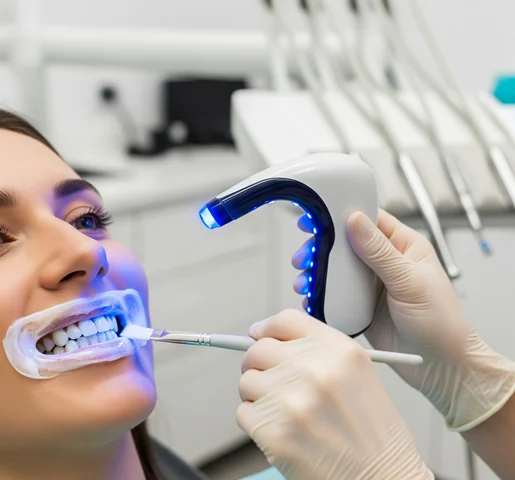
The Advantage of Professional Teeth Whitening
Professional whitening works differently from what you find at a
pharmacy. The concentration of the whitening agent is stronger, the trays are custom-fitted to your teeth, and Dr. Shariff monitors the process so you get results without sensitivity or gum irritation.
Here’s what that looks like in practice:

Dentist-Supervised Safety
Receive safe, clinically monitored treatments using customized carbamide peroxide or professional-grade hydrogen peroxide formulas.

Deep Stain Removal
Clinical whitening agents safely penetrate your enamel to break down deep-set stains without altering or damaging your natural tooth structure.

Enhanced Patient Comfort
We use customized trays and professional desensitizing agents to keep gel off your gums and minimize sensitivity — the most common complaint patients have about whitening done elsewhere.

Tailored to Your Anatomy
Choose between an immediate, dramatic in-office shade transformation or a customized take-home kit that lifts stains gradually over two weeks.
Schedule Your Smile Consultation in Trenton, NJ
A radiant smile starts with healthy teeth and gums. Before starting any treatment, a comprehensive dental exam is required to ensure you do not have underlying cavities or gum disease, which could cause severe pain if exposed to whitening gels.
Ready to transform your smile safely? Greenwood Family Dentistry proudly helps patients throughout Trenton, NJ, achieve brilliant, healthy smiles.
Call our Trenton office today or click below to schedule your cosmetic consultation.
PATIENT EXPERIENCES
What Our Patients Are Saying
EXCELLENT Based on 20 reviews
 Posted on Google
 Jake PhillipsAlways easy to find an appointment and the staff are lovely and fast!Posted on Google
 Brett RobertsDr. Shariff is wonderful and sensitive to a patient's discomfort.Posted on Google
 Janio CardonaI’have been a patient of Greenwood Family Dentistry (1902 Greenwood Aven Trenton, Nj)for over two decades, and it’s truly been one of the best dental experiences I’ve had . Back when Dr Richard Nedelman owned the practice , he was an absolute professional- whether it was a routine cleaning, root canals,filling in different materials or any other dental treatment, he always did exceptional work.He was patient,skilled , and even offered flexible payments arrangements to make things more comfortable for his patients. It was incredibly care, and I trusted him completely. After Dr Nedelman got retired a few years ago I was a bit worried about the change,but the new owner, Dr Farad Shariff has been just as outstanding. She is an excellent professional who take her time throughoutly explain every procedure, answer all questions and makes sure you feel comfortable and informed. The entirely staff is efficient,friendly and very punctual- appointments start on time with almost no waiting time.If something comes up and you need to reschedule, they handle it courteously and work with you to find a better date and time.Overall the level of customer service and quality of treatments remains Top-Noch. Greenwood Family Dentistry is a fantastic option for anyone looking for reliable, caring Family Dental Care in the Trenton area. I highly recommend Dr Shariff and the team -A-Plus from me.Posted on Google
 Sarahi DLConvenient hours available if you have a busy life. Friendly staff and always willing to work with one around dental care needs. Thank you!Posted on Google
 Mark UVery professional and accommodating. Dr. Shareef and her staff are courteous and friendly. Dr. Shareef is very knowledgeable in her work and advice. I had 2 different procedures with her in the past few years, and both were very efficient and excellent. I'm very satisfied and would recommend her to anyone and everyone.Posted on Google
 Clifton GrimesDr. Shariff and her team are amazing! The staff are caring, friendly and knowledgeable, and they always make me feel at ease. Dr. Shariff is the best dentist I’ve ever been to, period! Her gentle manner completely removed my fear of dental visits (especially injections 💉💉). I’m so grateful to have found a dentist who truly cares about her patients! Highly recommended!Posted on Google
 Jay DunnThe dentist always cares about the patient's well being.Posted on Google
 shania roseVery clean and peaceful environment. The staff was very pleasant and welcoming. The wait time was not long which I’m thankful for. After my service was done I was informed about possible problem areas and how they could be addressed so that gave me peace of mind. Overall 10/10 experience.
FAQ's
Frequently Asked Questions
Yes, professional whitening is entirely safe for your enamel when administered by a licensed dentist. Clinical whitening agents like carbamide or hydrogen peroxide chemically lift internal stains without altering the mineral structure of your tooth. Unlike highly abrasive store-bought charcoal pastes that physically scrape your teeth, dentist-supervised formulas protect your protective outer layer while brightening your smile.
Over-the-counter strips often leak onto your gums or lack localized desensitizers, causing temporary inflammation of the microscopic pores in your dentin. Reddit users frequently report this shooting pain. At Greenwood Family Dentistry, our professional treatments use customized trays to keep gel off your soft tissue and incorporate professional desensitizing agents to ensure a comfortable, pain-free process.
Typically, professional results last anywhere from six months to two years, but this depends heavily on your lifestyle. Frequent consumption of dark liquids like coffee, tea, and red wine, or tobacco use will restain teeth faster. Regular oral hygiene, routine cleanings at our Trenton office, and occasional touch-ups with custom take-home trays will maximize your radiant smile's lifespan.
No, you should never whiten your teeth if you have active tooth decay or untreated gum disease. If bleaching gel leaks into an open cavity or exposed root surfaces, it can cause severe, excruciating pain and permanent nerve damage. This is why a comprehensive health exam at Greenwood Family Dentistry is strictly required before starting any cosmetic dental solutions.
No, clinical whitening agents only affect natural tooth structure. They cannot alter the shade of synthetic materials like porcelain, composite resin, or dental bonding. If you whiten your teeth with existing dental work, your natural teeth will brighten while your crowns or fillings remain their original color, resulting in an uneven, mismatched smile.
Both are highly effective active whitening agents, but they break down at different speeds. Hydrogen peroxide releases its whitening power rapidly, making it ideal for fast, 1-hour in-office procedures. Carbamide peroxide breaks down more slowly over several hours, making it the preferred, stable choice for gentle, gradual overnight use in customized take-home dental trays.
A common concern on Quora is a "blue hue" or translucent appearance post-whitening. This happens temporarily because the tooth enamel becomes slightly dehydrated during the chemical process, causing it to reflect light differently. Once your teeth naturally rehydrate over the next 24 to 48 hours, their opaque, solid white appearance will fully return.
Retail kits use a "one-size-fits-all" approach. Generic trays allow bleach to spill onto your sensitive gums, causing chemical burns. Furthermore, retail laws restrict the strength of over-the-counter whitening agents. You end up paying for a weaker product that takes weeks to show minor results, whereas professional treatments offer customized protection and dramatic, immediate shade transformation.